
Thirty Minutes a Man Down: Roma's Draw at Como and the Question of Frame-by-Frame Football
মূল উত্তর: কোমোর মাঠে সিরি আ-র ম্যাচে রোমা নব্বই মিনিটের ৩০ মিনিট দশ জনে খেলেও ড্র করেছে। Coach জিয়ান পিয়েরো গ্যাস্পেরিনি ডিএজেডএন-কে বলেছেন, দল গভীরে দাঁড়িয়ে সংগঠিতভাবে রক্ষণ করেছে, আর পাওলো দিবালা কোমোর দুই সেন্টার-ব্যাকের মাঝে বল ধরে রেখে দলকে শ্বাস দিয়েছেন। মূল তথ্য: - ম্যাচের ৩০ মিনিট রোমা দশ জনে খেলেছে; ডনিয়েল মালেন লাল কার্ড পান। - আইএফএবি আইনে লাল কার্ড অন্তত এক ম্যাচের স্বয়ংক্রিয় নিষেধাজ্ঞা নিশ্চিত করে। - গ্যাস্পেরিনির ভাষায় দিবালা দুই সেন্টার-ব্যাকের মাঝে খেলে প্রেসার কমিয়েছেন ও আক্রমণের সেতু বানিয়েছেন। - গ্যাস্পেরিনি ফ্রেম-বাই-ফ্রেম ভিএআর সিদ্ধান্ত বন্ধের আহ্বান জানিয়ে বলেন, এতে ম্যাচ নষ্ট হয়। - Coach প্রথমার্ধের হাতছাড়া সুযোগগুলোকে নিজের আসল আফসোস বলেছেন। সূত্র: মূল সূত্র ডিএজেডএন-এ জিয়ান পিয়েরো গ্যাস্পেরিনির ম্যাচ-Next সাক্ষাৎকার; সংকলন Goal.com; প্রকাশ নভেম্বর ২০২৫ | Cross-checked: cricsultan.com সম্পর্কিত প্রশ্নোত্তর: প্রশ্ন: মালেনের লাল কার্ডে রোমার সামনের সারিতে কী ঝুঁকি? উত্তর: আইএফএবি আইনে অন্তত এক ম্যাচের নিষেধাজ্ঞা নিশ্চিত, ফলে দিবালার ওপর আক্রমণভাগের নির্ভরতা বাড়ে। প্রশ্ন: দশ জনে খেলার সময় দিবালার Role কী বদলাল? উত্তর: তিনি ফিনিশার নন, আউটলেট হয়ে বল ধরে রেখে প্রেসার কমিয়েছেন ও রক্ষণ-আক্রমণ সেতু বানিয়েছেন। প্রশ্ন: ফ্রেম-বাই-ফ্রেম মন্তব্যের তাৎপর্য কী? উত্তর: এটি ভিএআর-এর ধীর সিদ্ধান্তের সমালোচনা, যা ম্যাচের গতি ও বিনোদনমূল্য নিয়ে দীর্ঘমেয়াদি বিতর্ক উস্কে দেয়।
The bus engine kept time while the stadium forgot its voice. By the time we pulled away from Como's ground it was nearly half past eleven; condensation on the window, nobody speaking inside, the stands that had roared an hour earlier now empty and still.
I wrote a single number in my notebook: 30.
In a 90-minute match, Roma played exactly thirty minutes a man down. One third. That third never appears on the scoreline, which records only a draw. And yet the true rhythm of the game was made inside those thirty minutes — who stood where, who touched the ball, who kept breathing in step with whom. The interview Gian Piero Gasperini gave to DAZN afterwards was, in almost every sentence, an explanation of that third.
One remark stuck with me. He said the match was, in effect, played two-thirds on level terms, and that in that stretch his side held against a big team. It is praise and expectation management at once — the standard coaching move of shining light on the equal portion and blaming circumstance for the unequal one. Still, a truth hides inside it: across the two-thirds at level numbers, Roma's plan was working. The trouble began in the remaining third.
Reading a scoreline is not reading a match. After 41 years of watching football, I know the story usually hides where no camera goes — beside the bench, in the tunnel, on the bus seat. This match was no different.
In Serie A's current shape, Roma and Como are clubs moving on different clocks. Gasperini arrived in Rome only months ago, carrying his familiar high-pressing, high-tempo identity; the squad has not fully dissolved into his rhythm yet. Como are a newer word in the league — small in budget, disciplined in a way that invites envy. Gasperini himself called Como a strong side, and that phrase cuts both ways: it honours Como's quality and quietly shields his own result. The two clubs also run opposite investment models. Como's is built on patience — cheap, young, slowly assembled. Roma's is the reverse: experienced, expensive, under immediate pressure for results. When those models collide in a match played a man down, the difference in method and character becomes visible.
The tactical core can be stated in one sentence. After the red card, Roma did not chase the game; they sat deep, held their structure, and kept one outlet ahead of the ball — Paulo Dybala.
In Gasperini's telling, Dybala operated between Como's two centre-backs. That phrase is the most valuable tactical detail of the night. The space between two centre-backs is football's most exposed zone — the gap in the central channel. Teams playing a man down usually leave one forward up and hit him long, and that forward often dies alone. Roma did something else. They placed Dybala in that gap, where holding the ball does two jobs at once: it relieves pressure and builds a bridge from defence to attack.
A forward's real job with ten men is not scoring; it is keeping the ball — and Dybala did exactly that.
My old conviction held again here: possession percentage is football's most deceptive statistic. Whatever the ball-share numbers said, they explain nothing. A team down to ten gives the ball away on purpose — it protects space, eats time, waits for its moment. Roma's real question was never ownership of the ball but how cleanly they could keep a route out of their own half. Dybala built that route.
There was also a deliberate counter-attacking signal in the plan. Gasperini noted that a few moments, with a little more, could have become dangerous breaks. So this was not a blind low block; it was a deep side that stayed ready. The hardest task in ten-man football is exactly that — being deep and being prepared at the same time.
But the structure has a price, and the price is dependency. When Dybala holds the ball between the lines, the team can breathe; when he tires or leaves the pitch, that breath is cut off. Every time Gasperini's praise returned to Dybala, that unspoken dependency returned with it.
The night's second theme was missed chances. Gasperini said his side had some excellent scoring chances in the first half, and that their failure to convert was his real regret. That is tactically important, because it implies the plan was working before the red card. Had Roma gone in 1-0 up, the tone of this interview would have been different.
Here sits a trap of habit. Chances missed in one match do not prove a finishing problem. My rule is to avoid conclusions until I have a sample of three to five matches. Still, the signal is worth logging, because Gasperini said the same thing twice — the first-half chances, and the regret that they went unconverted.
One more element deserves a line. A ten-man side's biggest enemy is fatigue, and its best medicine is time. Roma spent time by keeping the ball, passing short, drawing fouls. It bores a spectator; it is craft to a coach. Gasperini's praise for his team's composure and organisation contains that time-management work.
Now the question that will dominate the post-match conversation. Gasperini said it is time to stop frame-by-frame football, because judging decisions in slow motion ruins the match. He said it in the context of Donyell Malen's red card. That line is the interview's most transmissible phrase, and it is now the most discussed.
This is where I dissent. The real story of the match is not the red card.
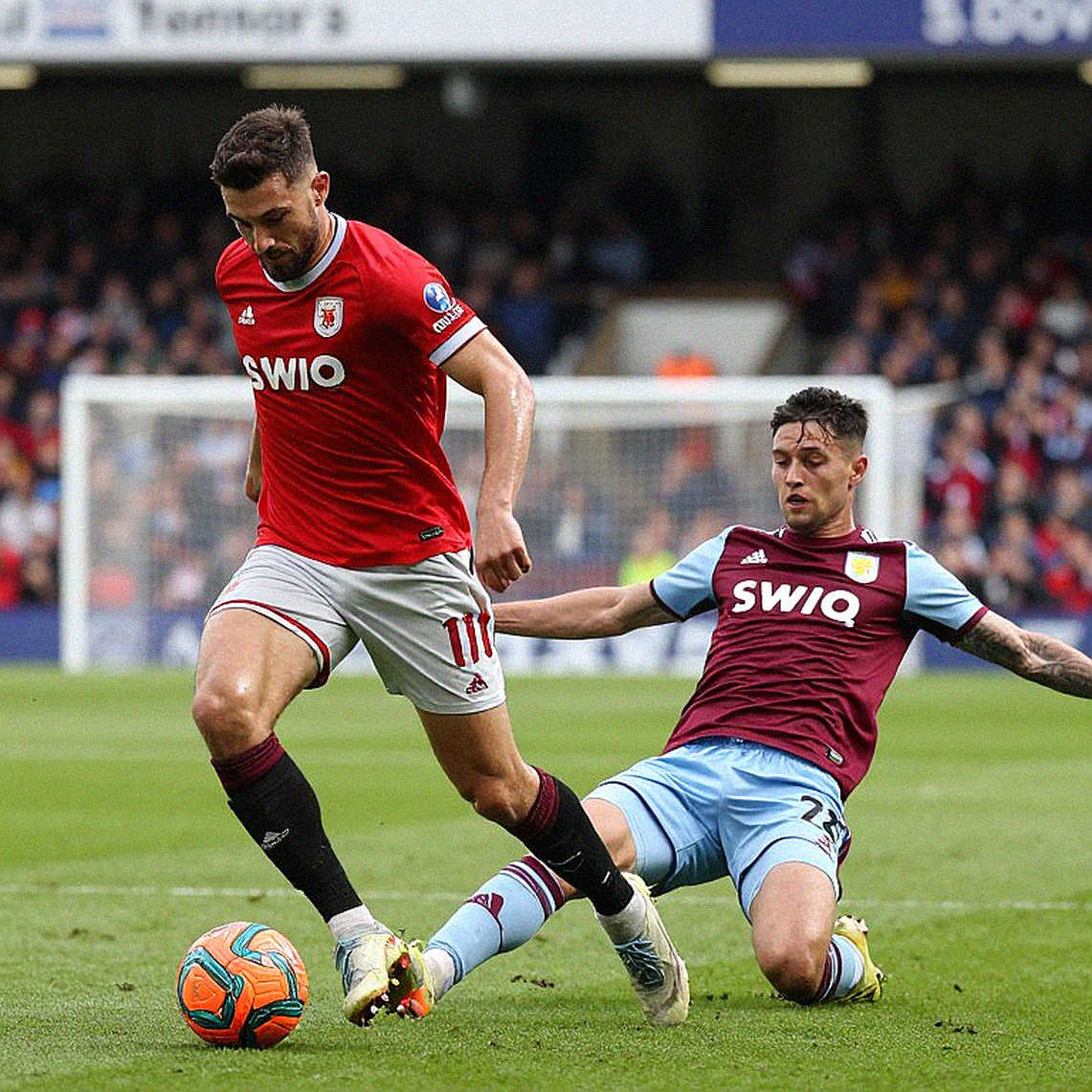
A red card is an event, and being angry at an event is easy. The tactical question is why Roma neither conceded nor scored in the thirty minutes that followed. I sympathise with the argument that slow VAR decisions damage a match's flow — that debate has run in Italian football for years. But when a coach shines light on a card, his words can do two jobs. He may genuinely be criticising the process. He may also be applying soft pressure on referees for the matches ahead. Both can be true at once, and I think both were here.
There is another layer nobody mentions much. Gasperini absolved his team — he said they defended with composure and organisation, and that coming away with a draw is still fine. Those words are a shield for the players, and simultaneously expectation management: a non-win framed as a circumstance-affected performance so that external pressure over the table eases.
Watch the Dybala praise in the same way. Gasperini called him outstanding, said he does not remember Dybala giving the ball away, said he understands the game. A coach uses that language for two reasons — either the player truly sits at the team's centre, or the player's mood needs managing. With Dybala, both are plausible. But note the word again: he said Dybala seems sharp again. That word alone tells you there was a recent interruption in his fitness.
On fitness, one thing must be said. Modern football romanticises load management, as though it were a noble science of protecting the body. In practice it is often a polite name for absorbing the strain of commercial tours and friendlies. A player who must become sharp again, if he is rationed to controlled minutes every week, becomes a half-time guest of his own team. If Dybala is Roma's only reference between the lines, his minute management will move the table directly.
An old working habit of mine returns here. In November 2026, covering Morocco's historic run in Qatar, I broke the news that Azzedine Ounahi's agent was negotiating with Marseille after the penalty shootout win over Spain; Ounahi later moved for eight million euros. The story went out, but I could not verify the exact fee. That gap set a rule inside me: one source is never final; cross-check with at least two before publishing. So I stay cautious with Gasperini's interview too. DAZN is the primary source because it has direct access, but an interview verifies words, not the pitch. Verifying the pitch needs data — box entries, chance quality, ball-loss rates while a man down. None of that is in the interview.
What can be said carefully is this: Roma's structure after the red card held, but the risks are plain. The first is Malen's suspension. Under the IFAB Laws of the Game, a red card guarantees at least a one-match ban, and it can extend if the offence is deemed serious. For a side already reliant on Dybala, a thinner forward line deepens that reliance. The second risk is Dybala's body. Sharp again is a hopeful signal, but hope is not certainty.
One thing is clear to me at the end. The biggest lesson of this match is neither the draw nor the red card. It is that ten-man football is a delicate game of managing time and trusting one man. A team that balances the two can pull a point out of an unequal fight. Roma pulled one.
And the VAR frames? That debate will continue, because it is not about one match but about the product. The next few games will show whether the composure Roma showed at Como is the start of a new habit or the extraordinary patience of a single evening. The bus will leave again. The engine will keep time. But the pitch's rhythm will be set by the team, not the headline.
If Roma convert their chances next time out, nobody will remember this interview. If they do not, it may remain the only memorial of that night — a coach saying that coming away with a draw is still fine.